May 18, 2026
Key Highlights:
● EV battery cooling systems are becoming a critical factor in long-term reliability.
● Real-world range often differs from advertised numbers due to thermal management.
● Poor cooling can lead to slower charging and reduced battery lifespan.
● Buyers should evaluate vehicles based on thermal management efficiency, not just range.
Estimated Reading Time: 8 minutes┃Post by: Jordan Vance
Why Thermal Management is the Silent Game-Changer in EVs
For years, EV buyers have focused primarily on one headline metric: range. Advertised distances, often tested under ideal conditions, dominate marketing materials, and shoppers compare vehicles almost exclusively on this figure. But anyone who has driven an EV in real-world conditions quickly learns that the story doesn’t end there. Heat and cold, high-speed charging, and aggressive driving patterns reveal a hidden influencer of performance: the battery cooling system.
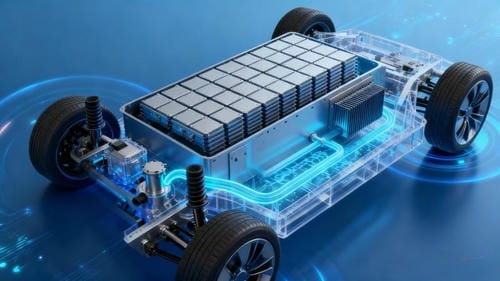
Thermal management refers to how an EV controls the temperature of its battery pack to ensure optimal operation. Unlike internal combustion engines, which rely on simple air or liquid cooling for the engine block, EV battery packs require precise temperature regulation to prevent degradation. Lithium-ion cells, the most common in today’s EVs, are sensitive to both heat and cold. For instance, a battery operating at 40°C may perform well in the short term, but repeated exposure without proper cooling can reduce capacity by 20-30% over five years.
Real-life data supports this. A 2025 study by the International Council on Clean Transportation found that EVs without active cooling lost an average of 15% of their usable range during summer months, compared to only 5% for vehicles with advanced liquid-cooled systems. Table 1 below illustrates how different thermal management strategies impact battery degradation over a five-year period:

From this table, it’s clear that vehicles with liquid-cooled batteries maintain both range and fast-charging efficiency far better than other systems. For buyers, this isn’t just a technical note—it directly translates to fewer unexpected slowdowns on trips and less degradation over the lifetime of the vehicle.
How Cooling Systems Affect Daily Driving and Charging
Many EV owners discover the importance of thermal management the hard way. Consider the case of an EV owner in Phoenix, Arizona, who drives a vehicle with only passive air cooling. During peak summer months, the car’s navigation system reported “reduced power mode” more than 10 times, each instance lasting 15-20 minutes as the battery attempted to cool itself. The same owner noted that fast-charging sessions frequently throttled after the first 20 minutes, forcing them to wait for the battery to reach a safer temperature before charging could resume at full speed.
In contrast, vehicles with advanced thermal management, such as liquid cooling loops or phase-change materials integrated into battery packs, rarely experienced such interruptions. Charging rates remained consistent even after multiple 200-mile trips on hot days. These real-world scenarios underscore why EV shoppers should look beyond range numbers. A car with 350 miles of advertised range may deliver only 280 miles during sustained summer driving without proper cooling. Meanwhile, a 300-mile vehicle with a sophisticated thermal system can reliably maintain near-maximum range in the same conditions.
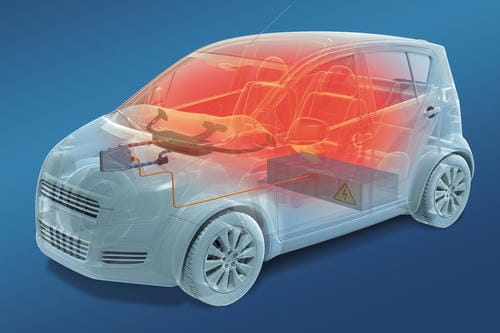
Thermal management also affects long-term reliability. Poorly cooled batteries experience chemical imbalances that lead to dendrite formation, increased internal resistance, and eventual capacity loss. EVs with robust cooling systems, however, retain most of their original capacity for longer periods. Owners who prioritize this feature often report fewer replacement costs, better resale values, and a smoother driving experience.
Choosing the Right EV: Beyond Range and Price
Given these realities, shoppers should add cooling system efficiency to their evaluation checklist. Manufacturers now provide information about battery thermal management in technical specifications, though it’s often buried in user manuals or press releases. Buyers can consider questions like: Does the vehicle have liquid cooling or air cooling? Are there software controls that actively manage cell temperatures? How does the system handle fast charging in extreme weather?
Illustrative comparisons help clarify this choice. Imagine two EVs: one offers 360 miles of range with passive air cooling, and the other provides 320 miles with liquid cooling. On paper, the first seems superior. Yet, if both vehicles are driven in Florida during July, the first might realistically deliver only 280 miles due to heat-induced throttling, while the second maintains nearly 310 miles consistently. Over a five-year ownership period, the liquid-cooled EV likely experiences fewer battery health issues and better charging consistency, providing a superior total ownership experience.
Investing in a car with a robust thermal management system is also an investment in future-proofing. As battery technology advances, higher-capacity cells become more sensitive to temperature fluctuations. Vehicles with sophisticated cooling systems are better positioned to adapt to new chemistries, software updates, and faster charging infrastructure. Buyers who overlook this aspect may find themselves dealing with unexpected limitations or premature battery degradation years down the line.
(The views expressed in this article reflect the author’s analysis of public data and industry reports. Individual vehicle performance may vary based on driving conditions, climate, and maintenance practices. Readers should consult manufacturer specifications and independent testing for detailed evaluations.)
FQAs
Q1: Does a larger battery automatically mean better thermal management?
No. A larger battery may store more energy, but without an efficient cooling system, it can still experience rapid degradation in extreme temperatures.
Q2: How can I tell if an EV has a good cooling system before buying?
Look for details in technical specifications, seek independent reviews, and consider vehicles with liquid cooling or active thermal management mentioned in press releases.
Q3: Will thermal management affect charging speed?
Yes. Batteries without effective cooling often throttle charging to prevent overheating, while advanced systems maintain higher speeds safely.
About Author
Jordan Vance is an automotive analyst and EV enthusiast with over a decade of experience reviewing electric vehicles and emerging battery technologies. He specializes in translating technical specifications into practical guidance for everyday drivers, helping consumers make informed choices in the rapidly evolving EV market.
References
[1] International Council on Clean Transportation. (2025). EV battery performance in real-world conditions.
[2] Electrek. (2024). Why battery thermal management is crucial for long-term EV reliability.
[3] InsideEVs. (2023). Summer range loss: How different EV cooling systems perform.
Explore more articles on this blog to stay ahead in your EV knowledge and make smarter vehicle choices.
Recommend:

Why Drivers Are Choosing to Hold or Upgrade Their Cars?

Why “Great Deals” at the Dealership Can Be Anything but — And When You Should Walk Away

Your Step-by-Step Roadmap to Avoid Buyer’s Remorse

The Opportunity Cost of Owning a Car and What You Could Have Bought Instead